
CuddleCot Baby Loss Bereavement Care Toolkit
Supporting Excellence in Perinatal Loss Care
This Bereavement Care Toolkit supports hospitals to develop or strengthen perinatal loss care in line with best practice. Created by our expert team in response to requests from hospital leadership teams, it brings together practical frameworks and resources to support compassionate, consistent care for bereaved families.
The toolkit helps teams to:
Deliver high-quality, compassionate care
Build confidence in perinatal loss support
Improve the experience of care for families
Align with professional bereavement care recommendations
These resources are designed to support continuous improvement in bereavement care across maternity services.
For further information, please contact info@cuddlecot.com.
Skip to:
UK Framework and Supporting Documents for Teams
UK Framework for Bereavement Care Stillbirth and Neonatal Death
This framework is primarily intended for obstetricians, nurse teams and midwives but may also be of value to general practitioners, and healthcare commissioners.
Supporting a family to take baby home after death
This framework supports teams to offer families the option to take baby home using the CuddleCot.
An introduction to cooling a baby after death
This framework is intended to act as a introduction to cooling a baby after death, and includes helpful guidance to inform bereavement programs.
UK Bereavement Care Checklist for Baby Loss
This checklist can be used as a framework to support facilities with: Any loss that occurs during pregnancy including, early or late Miscarriage, Intrauterine Death or Stillbirth. Any baby, at any gestation that has shown clear signs of life following delivery.
Guidance for Use of the CuddleCot in Higher Temperatures
The CuddleCot is designed to operate effectively in ambient temperatures up to
25°C. With increasing seasonal temperatures, please follow the guidance above to
ensure optimal performance.
Guidance for When to Use the CuddleCot
In perinatal loss, the approach is not always clear-cut. For this reason, care should prioritise the individual needs of each family, with a focus on compassionate, family-centred support. To assist staff, we have developed guidance on initiating cooling that ensures a sensitive, holistic approach.
Bereavement Supplies Directory:
Contact information for organisations that provide items to hospitals by location
Visit: cuddlecot.com/directory-for-bereavement-care-supplies
Free Online Bereavement Care e-Learning:
Free training includes a module on memory making options used in facilities globally.
Other Resources:
UK National Care Pathway for Pregnancy and Baby Loss: View/Download
nbcpathway.org.uk nbcpscotland.org.uk
Bereavement recommendations:
- NHS England (2020) bereavement care pathway supports use of cold cots to “allow parents to spend time with their baby” and reduce visible signs of change.
- The Stillbirth and Neonatal Death Society (SANDS UK), and similar bodies , support cooling devices to protect the appearance of the baby during time spent with family.
Clinical Evidence Supporting Cooling to Slow Perinatal Decomposition Article - Coming Soon
Lowering body temperature slows enzymatic activity, bacterial growth, and tissue breakdown.
Infants have less body fat and muscle mass, which may accelerate visible changes post-mortem. Prompt cooling mitigates this.(Knight’s Forensic Pathology, 4th ed. (Saunders & Knight, 2016)
CuddleCot U.S. Supporting Documents for Healthcare Teams
North America Bereavement Supplies Directory:
Contact info for organisations that provide items to hospitals by location: cuddlecot.com/directory-for-bereavement-care-supplies
Bereavement Care e-Learning:
Free training includes a module on memory making options used in facilities globally. Visit cuddlecot.getlearnworlds.com
External Resources:
Central Ohio Hospital Council - Community Standards on Perinatal Loss Care: View/Download
"Hospitals will offer all bereaved parents the opportunity to use a Cuddle Cot, which is a flexible cooling pad that allows extended time for parents and families to hold their baby, take photos, create memories, travel for extended families and make arrangements without feeling rushed."
Standards from the Joint Commission:
PC.02.02.13 states: “To the extent possible, the hospital provides care and services that accommodate the patient’s and his or her family’s comfort, dignity, psychosocial, emotional, and spiritual end-of-life needs.”
PC.01.02.01, EP #4 clarifies that initial patient assessment must include “social, spiritual, and cultural variables that influence the patient’s and family members’ perception of grief.” View/Download
Supporting Research for Cooling Options After Loss
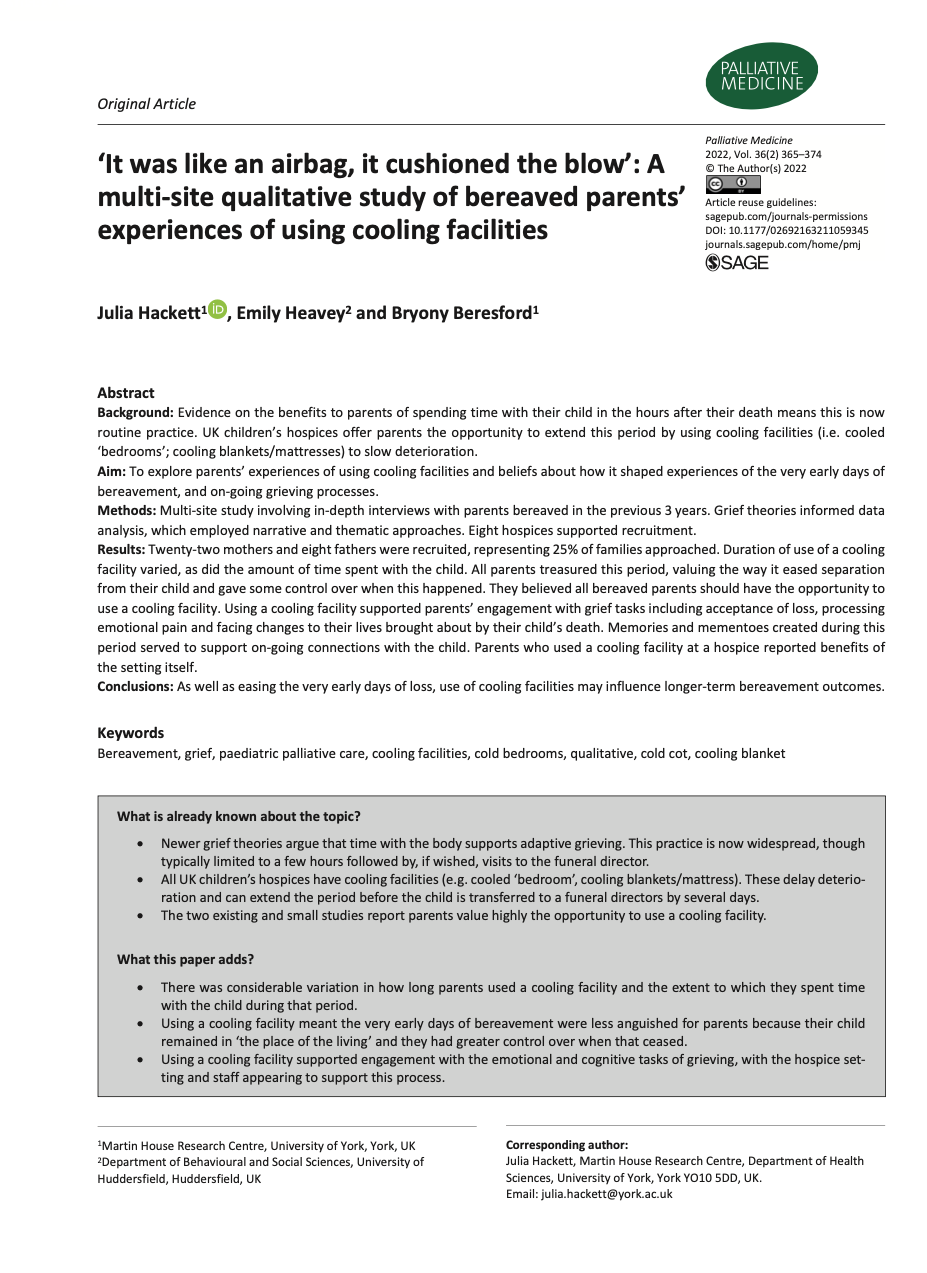
Researchers found as well as easing the very early days of loss, use of cooling facilities may influence longer-term bereavement outcomes.
What can good bereavement care look like?
- Bereavement care training is provided to all staff who come into contact with bereaved parents, and staff are supported by their Board to access this training. Find free clinical led eLearning bereavement care modules here.
- All bereaved parents are informed about and, if requested, referred for emotional support and for specialist mental health support when needed.
- There is a strategic bereavement lead in every Health Board in whose settings a pregnancy or baby loss may occur.
- All units have access to a room where bereavement care can be provided in a suitable and sensitive environment.
- All staff listen carefully to bereaved parents, offer them informed choices about their care and the care of their babies, and are guided by their wishes. Choices can include parents wishes for ceremonies, funeral arrangements and spending time with baby.
- Offering parents the opportunity to create mementos and spend time with their baby with devices like the CuddleCot is an important part of offering a well rounded and compassionate standard of bereavement care. It's important to provide parents with all the options available to them so that they can make an informed choice about their care.
To learn more about language and communication with families visit our free clinical led eLearning modules.
- A system is in place to rapidly signal to all health care professionals and staff that a parent has experienced a bereavement to enable continuity of care.
- Healthcare staff are provided with, and can access, support and resources to deliver high quality bereavement care. As part of our mission to raise awareness of baby loss and the available support, we offer free, clinically-led, evidence-based bereavement care training through eLearning modules for healthcare professionals involved in the care of the bereaved.
- Standardised letter of condolence
- Support for families and colleagues
- Bereavement visit offered to the family if appropriate

Offering Memory Making is Key to Quality Care - Free Memory Making e-Learning module

Remember My Baby Bereavement Photography

A Parent Cradles Baby Using CuddleCot Cooling Pad

Free, Clinical-led Bereavement Care e-Learning Modules - Learn more
"Families should never have to choose between holding their baby and maintaining cooling after loss"
Helpful tips for those supporting families before, during and after loss
Supporting families experiencing pregnancy loss or infant death can be challenging for healthcare providers. The care you provide can have a lasting impact on these families, so it is crucial that your support is both compassionate and empathetic. Be mindful of your words and actions to avoid further complicating their grief process.
Please use the following guide to help direct your care, remembering that every situation is unique.
Pregnancy and infant loss are deeply personal and devastating experiences. Unlike other types of loss, they often go unrecognised in society. As healthcare providers, it's crucial to validate the pain and grief of these families, regardless of gestational age. Acknowledge their loss and recognise that their baby was a person they deeply loved.
Early losses are sometimes perceived as less significant than later ones. However, even the earliest pregnancy losses can be profoundly challenging due to early parental attachment. Additionally, you may not know the couple’s full pregnancy history—perhaps they have endured several previous losses or have been trying to conceive for years. There is no right way to grieve such a loss, so allow the family to grieve in their own way.
When supporting a family who has experienced stillbirth, remember that this is their experience, not yours. Even if you have faced a similar loss, it's essential to focus on them and recognise that each loss is unique. It's appropriate to say, "I'm so sorry. I had a similar loss, and I am here to guide you through this." Whether or not you have experienced perinatal loss, avoid sharing your opinions or advice unless asked. Be mindful not to impose your values or beliefs on the family, as everyone grieves differently.
It's okay to cry with your patients, but if you feel overwhelmed, quietly excuse yourself until you can regain composure. If you are unable to provide compassionate care for any reason, communicate this to your charge nurse or supervisor. Every woman, especially those facing such a tragic loss, deserves appropriate and respectful care.
Key highlights of compassionate care include:
- Acknowledge the loss
- Use the baby’s name
- Validate the familial roles - refer to parents as the mum and dad
- Validate emotions - let parents know that their emotions are valid
- Be present - Let the family know you are available to talk, listen, or just sit with them in their grief. Make sure that the family has your full attention.
- Be empathetic
- Be respectful - Be mindful of the words you use. It is important to use language that is clear and easy to understand. Avoid using medical terminology whenever possible. Respect the family’s choices regarding viewing, holding, or taking photographs of their baby. Provide them with the information, discuss their options, and support their decisions.
- Be culturally competent - Be sensitive to the family’s cultural and religious preferences. Different cultures and religions have varying customs and rituals related to pregnancy and infant loss. Taylor your care considering the needs, preferences, and cultural or religious background of your patients. When in doubt, ask!
- Be patient - The family will have many difficult choices to make in the next few days. Be patient, these are huge decisions. Allow the family some time to absorb the news of their loss.
- Provide privacy - Many families need some time along to grieve and process their emotions. Ask them for their preferences, then allow them the space they need. It is a good idea to provide a pen and notepad so they can write down any questions they have. Make sure that the family knows when you will return, that you are available, and how to get ahold of you should they need you sooner.
- Take care of yourself - Finally, remember to take care of yourself. You can’t take care of others if you don’t take care of yourself. Providing care to families experiencing pregnancy loss can be emotionally taxing. It is important to take care of yourself physically and emotionally to avoid compassion fatigue. Sharing your experiences with your coworkers who have experienced similar experiences can be therapeutic. Visit our Clinician Wellbeing page.
To take our free eLearning module on Language and Communication. This module will provide you with a better understanding of how to communicate with bereaved families
Women experiencing stillbirth may require extra care and attention. Ensure her basic needs, such as food, water, and comfort, are met. Consider asking dietary services to provide a comfort cart with snacks and beverages for the patient and her family. Make it easy to stay hydrated by frequently refreshing her water pitcher.
Physical pain may be more intense for women experiencing perinatal loss. Ensure her pain management needs are addressed. After delivery, encourage the parents to shower and rest when needed. Keep tissues handy as there will be many tears, and offer washcloths or face wipes for her comfort. Remember to also attend to the needs of the spouse or partner, giving them privacy but checking in frequently.
The loss of a child is a deeply emotional and traumatic experience for both parents. Partners often feel the need to be strong for the mother and may be overlooked. Provide compassionate care to partners and include them in decision-making as much as possible.
Siblings can grieve deeply after a stillbirth. While personal opinions may vary, it is ultimately up to the parents to decide how involved siblings should be. Experts recommend giving children the option to meet or hold the baby, as they are best able to determine their readiness. Forcing a child to participate in something they are not ready for may cause more harm.
Grandparents grieve the loss of their grandchild and the heartbreak their own child is experiencing. Include them in the process and encourage them to interact with the baby.
Ensure the patient has the option to have extended family members, friends, or support persons present. For some families, the presence of loved ones provides comfort and reduces the sense of isolation.
For a list of resources for all the family refer to our Grief Resources page.
Discovering a fetal heartbeat is absent while caring for a pregnant patient is a distressing situation. Respond quickly and compassionately with these steps:
- Be Honest: Inform the family about difficulties in finding the baby’s heartbeat.
- Explain Next Steps: Describe the next actions, such as having a physician perform an ultrasound.
- Provide a Timeline: Let the patient know when you will return and adhere to this schedule.
- Communicate Gently: Deliver the news clearly but gently. Be prepared to answer questions.
- Provide Privacy: Ensure the family has a quiet space to process the news, and offer a pen and notepad for them to write down questions.
- Explain What to Expect: Share information about upcoming medical care, tests, or procedures to help lessen the trauma.
To learn more about language and communication, refer to our free eLearning modules.
Families experiencing miscarriage, stillbirth, or neonatal death may not absorb all verbal information. Providing both written and verbal information:
- Improves understanding by ensuring a comprehensive grasp of the situation.
- Promotes informed decision-making regarding testing, funeral arrangements, and other care aspects.
- Accommodates different learning styles.
- Provides repetition, which is important as grief can impact concentration and focus.
Ensure the physical environment is peaceful, private, and comfortable for the family. Avoid high traffic areas and rooms near the nursery. Keep the room at a comfortable temperature, and use dimmed or natural lighting to create a calming space. Ensure tissues are available and inform ancillary staff about the patient's situation discreetly.
Whenever possible, provide continuity of care. This allows the family to develop a trusting and supportive relationship with their nurse or other healthcare provider. Trust and familiarity facilitate open communication and a sense of safety. Ideally, the nurse caring for a family experiencing perinatal loss should not have other assignments.
Families experiencing perinatal loss often need more support than the nurse or physician can provide. Offer referrals for special ceremonies, spiritual support, social workers, and other resources. Connect them with local or virtual support options for perinatal loss.
Anticipating a stillbirth is emotionally draining. A birth plan helps grieving families feel more in control and outlines their options. Let the family know there are no right or wrong decisions, and respect their choices.
Photographs are valuable mementos for parents who have experienced pregnancy loss. Take many photos of the baby and family interactions. If the family is unsure, offer to store photos in case they change their minds later.
To learn more about the types of memory making and helpful tips, refer to our free eLearning module.
There are also organisations who will take professional photos of baby and their family for free.
It's worth having this information somewhere accessible for your staff to refer to.
UK:
Remember My Baby - Further information
Freephone number 0808 189 2345
info@remembermybaby.org.uk
USA and International:
Now I Lay Me Down To Sleep Remembrance portraits - Find a photographer
After delivery, gently prepare the family for the baby’s appearance. Encourage them to hold, rock, and read to the baby. If the parents haven't done so, suggest they name the baby and use the name in interactions. Help them create memories by bathing and dressing the baby.
For more memory making tips and advice, refer to our free online eLearning modules.
Stillbirth keepsakes are treasured mementos that provide comfort and a connection to baby. Offer ideas for keepsakes and connect families with organisations that provide free items.
- To learn more about the types of memory making, including casts, hand prints, photographs and more, visit out free eLearning modules.
- For a list of resources for memory making refer to our Directory for Healthcare Professionals.
We recommend making a note of the resources available in your area so that staff can access this information at anytime.
Provide information on burial options, respecting the family’s cultural and religious beliefs. Options include traditional burial, cremation, hospital burial, and memorial gardens.
Encourage the family to spend as much time as they need with their baby.
Use the CuddleCot to give the gift of time to grieving families. Encourage parents to hold baby using the CuddleCot cooling pads. (Included as standard in your CuddleCot system, there will be a pre term and full term sized pad. The CuddleCot can be used from day one).
The CuddleCot can provide time for women to recover from medication side effects, to create precious memories, allow extended family the time to travel to meet baby and support parents, and the time to make arrangements without feeling rushed.
We recommend that the CuddleCot is serviced once a year by our expert servicing team. Spare parts can be purchased from our Spare Parts Shop.
Find instructions and how to guides on using the CuddleCot here.
Respect the family’s wishes for when the baby should leave the room and handle the baby with care and respect.
Leaving the hospital after stillbirth is painful for parents. Ensure they have privacy when leaving and avoid encounters with other mothers and babies. Provide printed copies of all discussed information, customised to meet their specific needs, and avoid distressing content.
Let the family know that you remember them and their baby. Send a sympathy card signed by the healthcare team, and consider honouring the baby’s first birthday with a card. Host annual memorial services and invite families to participate.
Identify stakeholders within the organisation involved in perinatal loss, including nurses, obstetricians, surgical technicians, lactation consultants, dietary staff, chaplains, social workers, housekeeping, emergency department, surgical services, radiology, and laboratory staff.
Educate and support these individuals and teams on what good standardised bereavement care looks like in your facility.
Ongoing education ensures healthcare professionals have the knowledge and skills to support grieving families. Provide access to relevant resources and conduct learning needs assessments. Offer various training formats, incorporating real-life case studies and scenarios.
Refer health care professionals to our free eLearning modules.
Establish emotional support for team members caring for families experiencing perinatal loss. Create peer support groups and offer debrief sessions. Assign experienced mentors to guide healthcare professionals and encourage self-care activities.
Refer to our Clinician Wellbeing page for helpful tips and links to resources and organisations supporting mental health.
Ensure your facility is always prepared to support bereaved families.
Contact organisations local to you about the resources available to families. These can include, photography services, bereavement boxes, memory making supplies, casting and more.
For a list of organisations visit our Directory for Healthcare Professionals.
- We recommend creating a dedicated space in your facility for bereavement care resources, such as memory boxes and CuddleCots. Additionally, maintain an accessible record of these resources, including contact details for healthcare professionals to refer to.
- We recommend your CuddleCot is registered as an asset in your facility and servicing is carried out once a year by our Service Center to ensure you are always ready to support families. Contact our expert servicing team.
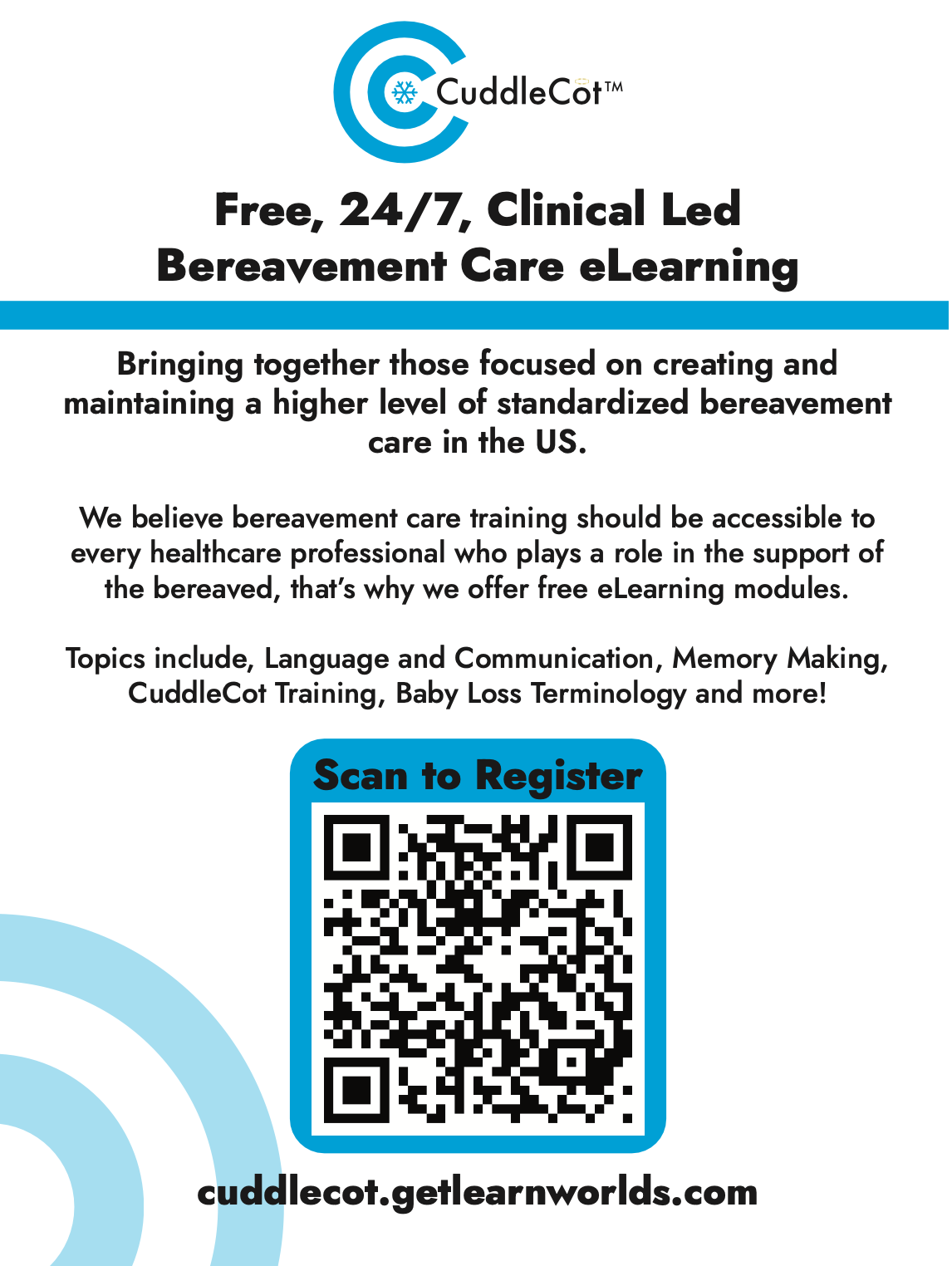
24/7, Free Evidence Based Bereavement Care Online Learning:
We believe every team should feel empowered to care for families navigating loss, that's why we offer Healthcare Professional modules for free to support your bereavement program at: cuddlecot.getlearnworlds.com
Topics include, Memory Making, Caring for a baby that has died, Pregnancy and baby loss definitions and statistics, Myths and misconceptions around cooling, CuddleCot super user training and more!


Articles from Bereavement Care Team:

Cooling in the Context of Perinatal Bereavement Care

Does Continual Cooling Matter After Baby Loss?

How Holistic Nursing and CuddleCot Support Families After Perinatal Loss

Saline Immersion: An alternative concept in bereavement photography
How to Support Bereaved Parents: A Guide for Friends and Family
